Showing posts with label Iranian Poetry. Show all posts

Sunday, 3 January 2016

The perils of writing

Iran and its authors

The history of modern Iranian literature has been shaped by censorship. Nonetheless, Iran is hoping to be guest of honour at the world′s leading book fair in Frankfurt in 2018.
Reading time just two minutes a day: the majority of Iranians are not interested in reading works that have been subjected to heavy editing by the country’s cultural censors. ″The more closely a work of literature resembles the global republic of letters, the more it is subject to the wrath of the censor,″ explains Cheheltan. Courtesy Qantara
by Amir Hassan Cheheltan, Qantara.de

In a bid to clarify just how much pressure Iranian writers are under, let us consider just a few of the calamities visited upon them during the last three decades.

They spirited a poet away from his wedding celebration and handed him over to a firing squad; a respected translator was found by the road with obvious injection marks in his arm; they conspired (but failed) to plunge a bus carrying twenty-one writers travelling to a cultural event in a neighbouring country into a gorge; they grabbed a poet on his way to a supermarket and an hour later dumped his corpse on the outskirts of the city… The list goes on and on. Writing is indeed a perilous activity, something everyone engaged in it in Iran knows.

In this absurd climate, Iranian writers punish themselves for the sake of writing and resort to self-destruction. Some fall prey to addiction; others choose the path of exile, which, it goes without saying, accelerates the process of self-destruction. Those who remain behind must endure strict and gruelling censorship.

What has happened is this. They have established a ministry in Iran, the principle duty of which is to inspect what writers are writing, what film-makers are filming, what painters are painting – basically what artists in general are doing.

Thursday, 29 October 2015

The Shahnama in Contemporary Iranian Art

Sadegh Tirafkan (Iranian, 1965–2013). Multitude 10, 2008. Digital photo collage, lambda print; H. 29 1/8 in. (74 cm), W. 44 1/8 in. (112 cm). The Metropolitan Museum of Art, New York, Purchase, 2011 NoRuz at the Met Benefit, 2013 (2013.258). Courtesy Met Museum.
by Courtney A. Stewart, The Metropolitan Museum of Art

Though the vast majority of the Met's Islamic collection comprises historical artifacts, we have recently started collecting contemporary art from the regions represented in our galleries. Deciding what exactly is included in the field of contemporary Islamic art is an issue that has been heatedly debated in past years, including most recently at a conference, Contemporary Islamic Art, Design, and Architecture 2015, that I attended in Singapore just a few weeks ago. Scholars have differing opinions of how to define or label works from this category, and our department takes its own particular approach. For us, the collecting mandate is that modern and contemporary works must relate to the historical collection.

A popular theme for some contemporary Iranian artists is to use iconography that refers to the Persian national epic, the Shahnama (Book of Kings), originally composed by Abu'l Qasim Firdausi (935–1020). In the work above, Rustam Returns at Age 30 after Being Brought Up Abroad, Iranian artist Siamak Filizadeh uses new media and popular culture to reference the hero Rustam. This same character appears in illustrations found in various manuscripts of the Shahnama, including the famous sixteenth-century version created for Shah Tahmasp.

Identifiable by his leopard-skin helmet in both the historical and the contemporary depictions, artists have usually portrayed Rustam in a manner that highlights his bravery and strength. In Filizadeh's work, he represents Rustam the hero as a muscular bodybuilder, with the letter "R" covering a red-and-yellow Superman logo on his bare chest. Here, he holds a rocket-propelled grenade launcher with a small decal of the film character Rambo and wears a Dolce and Gabbana belt. Contemporary Rustam appears with a tiled Safavid-style arch and rocks akin to those found in Persian miniature painting, as well as the Shahyad monument (Burj-i Azadi) built in 1971, considered to be the quintessential symbol of and gateway to modern Tehran. The work is a whimsical creation of an immediately identifiable character and uses visual cues to bridge chronology between historical and contemporary Islamic art.

Meanwhile, in Sadegh Tirafkan's Multitude 10, the artist creates a digital photo collage of young Iranian girls performing exercises in a gym class.

Thursday, 22 May 2014

Persian classical music mourns a master

The death of virtuoso Mohammad Reza Lotfi marks the end of an era.
Shajarian and Lotfi, Shiraz Art Festival, 1976

The recent death of Iranian master musician Mohammad Reza Lotfi (1947-2014) on May 2 at the age of 68 marks a crucial turning point in the history of classical Persian music and its spectacular rise and fall as a performing public art. 

Lotfi was a Tar and Setar virtuoso who had collaborated with prominent Iranian vocalists Mohammad Reza Shajarian, Shahram Nazeri, and others and along with a handful of other master musicians of his generation had transformed Persian music from its slumbering, sedate and secluded courtly and mystical milieu into a massive scale public and vastly popular art form. It is impossible to imagine the social history of Iran of the last half a century and through the thick and thin of a cataclysmic revolution and a bloody war without thinking of the definitive presence of classical Persian music as reconceived by Lotfi's generation of master musicians. 

Mohammad Reza Lotfi was part of a generation of classical musicians who exponentially expanded the public sphere upon which Persian classical music found and performed itself. This proud possession of a rich and diversified culture entered the public sphere in earnest in the course of the Constitutional revolution of 1906-1911, and with the establishment of Tehran Radio in 1940s and subsequently Iranian National television in 1960s and the Shiraz Art Festival in the 1970s reached its spectacular zenith.

Today lovers of Persian music remember the young Lotfi and Shajarian and their fellow musician Naser Farhangfar's confident and ambitious visages from their legendary performance of the tasking Rast Panjgah scale in Shiraz Art Festival in 1975. From that iconic moment at the mausoleum of Hafez in Shiraz Persian classical music began a long and loving rendezvous with contemporary Iranian social history.

Friday, 2 May 2014

Mohammad-Reza Lotfi

A silence has fallen now Lotfi has gone, but only till the next time we listen to his music, which is where he has always lived. 


Saturday, 12 April 2014

The Cinema of Childhood

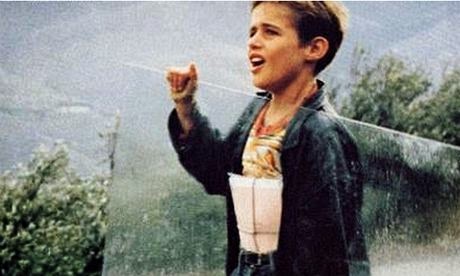
Willow and Wind: a prose-poem of a film. Directed by Mohammad-Ali Talebi, 1999. Courtesy  The Guardian

The most famous fictional character in the world in the last generation was a child, Harry Potter. When the films of JK Rowling's books came to be made, they helped define a new type of CGI fantasy cinema. In the era of the camera phone, children are being filmed more than ever before, by their relatives and friends. A vast digital visual archive of childhood is being created. And yet, in our same era, we are more wary of filming other people's children than ever before. Images of childhood are escapist, multiple, personal and contested.

But beyond the fantasy child, the everywhere child, and the policed image of children, we are living in a golden age of films about children, and haven't quite noticed. Movie directors in Iran, Japan, the UK, Holland and elsewhere are releasing masterpieces about childhood. Why is this golden age happening, and why does it matter?

In the era of the Hollywood studio, child actors like Shirley Temple and Mickey Rooney, both of whom died recently, gave plucky, stylised, showbiz performances. Shooting in a studio, they were surrounded by scores of technicians, large cameras and forests of light stands. Under such circumstances it was hard for a kid to behave naturally. They had to be highly directed, puppeteered almost.

In recent decades, by contrast, the radical miniaturisation of shooting equipment has meant that child performers can be far less intimidated by the movie making process. Of course the Harry Potter movies are still big studio production numbers, but in smaller budget movies, children can be filmed anywhere, with few people behind the camera and no light blasting them. As a result of this, child performances in films like Clio Barnard's recent The Selfish Giant have become more honest; young characters have more agency than at almost any other time in the history of the movies. Children are ad-libbing in front of the camera more, and, in a string of masterpieces made in Iran, improvising. In this golden age of children's cinema, the movies feel as if they are being co-directed by the child and the filmmakers.

Tuesday, 18 March 2014

Rumi’s Norouz Greeting

Text from the facsimile edition of the oldest extant manuscript of the Masnavi, dated 577 AH/ 1278 AD, folio 281A, in the Konya Mavlānā Museum, published by the Turkish Ministry of Culture, 1993. Image courtesy of Alan Williams.


Now leave this, father, New Year’s Day is come,         
the creatures’ mouths are sweetened by our Maker.
Back to our river came the spirit’s water,                     
our King has come back to our neighbourhood.
Fortune parades herself and trails her skirts,                 
and beats the drum to break vows of repentance.
Once more the flood has swept away repentance,      
our chance has come now sleep has got the watchman.
The drinkers quaffed the wine and all got sloshed!    
Tonight we’re going to wager our possessions!
From ruby life-increasing spirit-wine                               
we’re ruby in a ruby in a ruby.
The place has come alive again – delightful!                
Go burn esfand against the evil eye!
I hear the noise of happy revellers!                               
Beloved, we must always be like this!...


Translated by Alan Williams from the Sixth book of Rumi’s Masnavi, ed. R.A. Nicholson vv. 939-946 (ed. M. Este‘lami 944-951).

Alan Williams is British Academy Wolfson Research Professor 2013-2016 and is also Professor of Iranian Studies and Comparative Religion at the University of Manchester, England. 

Wednesday, 5 March 2014

Iranian artist Shirin Neshat on art, politics and changing the world

Interview: Iran’s foremost female artist tells Art Radar how she uses art to explore fundamental human truths.

Shirin Neshat in her studio, 2014. Photo by Christine Lee. Courtesy Art Radar.

by Christine Lee, Art Radar

Iranian-born artist Shirin Neshat and Christy MacLear, the Executive Director of the Robert Rauschenberg Foundation, speak to Art Radar about the Foundation’s new One-to-One artist initiative, the current exhibition Our House is on Fire in New York City, and Neshat’s internationally acclaimed works on culture, gender and politics.

On 30 January 2014, New York visitors attended the opening of the exhibition Our House is on Fire, which showcased works by Shirin Neshat for the new One-to-One initiative. The project was created by the Robert Rauschenberg Foundation (RRF) to “support contemporary artists as they create work in the service of advancing human rights, cultural understanding, and international peacekeeping.”

The foundation selected Neshat as their first artist for this initiative. Known for photography, video installations and films on Islamic culture, religion and politics Neshat chose to travel to Cairo and conceive a new series of photographs depicting “personal and national loss” by Egyptians after the failed revolution for the initiative. The exhibition runs until 1 March 2014.

Rauschenberg’s legacy and how art can change the world


Could you tell Art Radar about the history of the Robert Rauschenberg Foundation? When was the Rauschenberg Project Space founded and for what purpose?

Christy MacLear [CM]: The Robert Rauschenberg Foundation was actually founded by Bob during his lifetime. The Foundation was one of many ways in which the artist was philanthropic – the others including grants he gave to artists in emergency needs, his advocacy for artist rights throughout his life, and his record of developing work to benefit causes such as the environment or social justice. After Bob’s death, the Foundation received the assets from his estate which expanded the role to now include: managing his artwork and legacy; fulfilling a larger philanthropic programme; and starting up a residency for artists of all disciplines on his estate in Captiva.

The Rauschenberg Project Space used to be a warehouse which stored artwork but sat largely under-utilised. We converted it from a warehouse into a project space in order to pilot a number of ideas, strategic directions, which the Foundation was considering as we were developing our programmatic plan for how to serve artists and our community best.

Tuesday, 10 December 2013

Iranian Woman

Songs of yearning, desire, and despair from the female Iranian vocal tradition

still from Malek Khorshid (The Sun King) (1975) - Ali Akbar Sadeghi
Ali Akbar Sadeghi, still from Malek Khorshid (The Sun King),1975.

by Joobin Bekhrad, REORIENT

It stands in supplication, rending its breast, crying out to the heavens above, a look of anguish on its stony, weathered face. With curiosity and awe, I regard the statue of a singing woman, unearthed from a grave in Marlik, an ancient site in the foggy, leafy, Northern Iranian province of Gilan by the Caspian Sea. Images from Ebrahim Golestan’s haunting documentary, The Hills of Marlik flash before my eyes, and for a moment, I try to imagine the story behind this, as well as the other myriad statues of men, women, and animals sculpted some 3,000-odd years ago by the roughened hands of my ancestors. And the fruits of the earth once again returned to the earth; and the earth is a woman deep in slumber, with secrets and dreams. Who was this woman, I ask myself; what was her song, and to whom was it addressed? Gazing at these earthenware sculptures, almost childlike in their simplicity and earnestness, I find myself in disbelief, tempted to look upon them as the stuff of myth and fable; but again, the images flicker before me, and I’m reminded of the reality: But they were – they ate, slept, laughed, and dreamt.

From the songs of Marlik to those of today’s generation of musicians, Iranian women have been continuing a tradition that, while suppressed at various points in Iranian history, still remains ever strong and forceful. With the fall of the Sassanian Empire and the ushering in of new traditions, the female vocal tradition was relegated more or less to haram (lit. ‘forbidden’) territory, although it nonetheless managed to survive the ravages of time, and even enjoy a popular resurgence from the early 20th century onwards. Today, efforts are yet again being made to stifle the sound of Iranian women. While a ban on solo female singing in Iran is in place, that hasn’t diminished its popularity in any respect, nor has it deterred female Iranian singers from performing, recording, and touring, albeit outside the country. If you want these bonds broken, wrote Forough Farrokhzad in a poem addressing the Iranian woman, grasp the skirt of obstinacy!