Sunday, 23 September 2012

Iranian Art That Transcends Politics

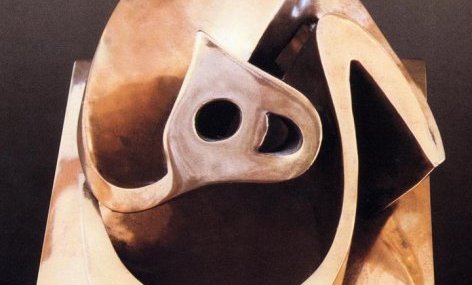
Parvis Tanavoli's 'Heech' means nothing, or null in Farsi. He writes the word in the Farsi script and places it in different positions and forms. Image courtesy Al-Monitor

by Roshanak Taghavi

For a mystic like ancient Sufi poet and philosopher Jalal al-din Rumi, the progression toward “nothingness” — known in Persian as “heech”— is spiritual.  No matter what one’s external circumstances may be, self-awareness is an art to be realized personally, deep within oneself.

“Since you are more than tongue can tell, behold how eloquent I am without a tongue,” he wrote almost eight centuries ago. “Like the moon, without legs, I race through nothingness.”

Iranians have, throughout their history, engaged in this pursuit of spiritual progression — both during Iran’s millennia-long institution of monarchy and also after the country’s 1979 Revolution, which brought with it the establishment of an Islamic Republic.

Through it all, they have adapted to the challenges that came with new shifts in rule, infusing the realities of their external circumstances into personal rituals (such as holidays or prayers), and saturating their poetry and art with symbolism. Through the written word, the creation of art and an inherent flexibility, Iranians have always managed to communicate “without a tongue.”

Rumi, whose 800 year-old poems are, coincidentally, the most widely read throughout the United States, remains deeply revered within all strata of Iranian society. His teaching of humanity as Heech, or nothingness, is most prominently conveyed through the work of contemporary Iranian artist and sculptor Parviz Tanavoli.

Tanavoli’s sculpture, Poet Turning into Heech, which depicts the body of a man turning into a poet, is the centerpiece of the Metropolitan Museum of Art’s permanent collection of contemporary Iranian art in New York.

Saturday, 22 September 2012

The Beauty Regime

by Tori Egherman, Tehran Bureau 

When I first started living in Iran, I was a kind of an illiterate, exotic creature who had to learn the alphabet from scratch and could have meaningful conversations only with toddlers. I was tolerated and coddled in equal measures, which made life easier for me. My mistakes were cute and lovable instead of breaches of protocol that could cause catastrophic rifts in the delicate political balance of the family.

It wasn't just language that messed with me. I was a fashion disaster, ill-mannered and coarse. I must have seemed an oaf to people who'd practiced good manners for millennia.

Nothing made me feel more oafish than the women surrounding me. Most wouldn't dream of leaving the house looking less than perfect. Their nails were exactingly manicured, their hair straightened and dyed, their bracelets gold, their eyes carefully outlined. At parties they wore low-cut, form-fitting dresses. They danced with flair as though their hips were unhinged, while my moves had been learned in proto-mosh pits. I could slam with the best of them, but anything more refined required concentration.

On top of that, my eyebrows had never been trimmed and my hair was unruly. I had never quite outgrown my tomboy phase and the longest time I'd spent in heels was about two hours: long enough to dance at a friend's wedding.

In the cafés in North Tehran, women let the obligatory headscarves slip to their shoulders, making a great show of lifting them up over exquisitely coiffed hair. They balanced on heels high enough to make me dizzy, navigating the uneven pavement with grace.

Friday, 14 September 2012

Rhino Season

Bahman Ghobadi’s Latest Film, Featuring the Return of the ‘Hero of Children’
(L-R) Caner Cindoruk, Monica Bellucci, Yilmaz Erdogan & Behrouz Vossoughi. Image courtesy REORIENT

by Joobin Bekhrad, REORIENT

Under a starry sky, on a typically warm and humid September night in the heart of Toronto, throngs of giddy Iranian filmgoers (with, of course, the odd exception here and there) formed a serpentine queue outside the historic Elgin Theatre, full of hope and great expectations – and understandably so; for they were a privileged few, who would not only witness the world premiere of a film from one of Iran’s most celebrated directors, but also the performance – and presence – of an Iranian icon. After apparently denying countless other offers for lead roles in other films, Behrouz Vossoughi – perhaps the most beloved and celebrated Iranian film star from pre-Revolution Iran – chose Ghobadi’s latest cinematic venture to make his long-awaited comeback.

Undeniably the star of the evening – far overshadowing even Ghobadi himself – Behrouz was given nothing short of the red carpet treatment, as ecstatic, ogling fans cheered and applauded at his every word, and presented him many a standing ovation. If not for the ‘hero of children’, as Ghobadi referred to him throughout the evening, then for whom else would they do so? For who could ever forget the brazen avenger that was Gheysar, the tragic Reza Motori, the naïve and foolhardy Mamal Amrikaee, or the tough-nosed brawler in Kandoo? It would be perfectly plausible to surmise that on September 12, Iranians stormed the Toronto theatre for little else than to catch a glimpse of that hero of children, and perhaps revel in the memories of Iran’s golden years.

Rhino Season, Ghobadi’s latest film set in Turkey, starring alongside Vossoughi the Italian actress Monica Bellucci and oddly, Iranian pop sensation Arash (as well as a cast of Turkish actors including Yilmaz Erdogan), is based on the story of the ill-fated Sadegh Kamangar, an Iranian Kurdish poet, and draws upon true events, as well as Kamangar’s diaries and collection of poems for its basis. Seen through the lens of Ghobadi, whose direction of the film was based on his personal interpretation of Kamangar’s poetry (as he later revealed after the screening), Rhino Season is at once a love story, a surreal exploration of one man’s soul and poetic vision, and a depiction of the tragic consequences of the Islamic Revolution.

Saturday, 8 September 2012

Moments of truth

An exhibition of Iranian art
Pouya Parsamagham's CCTV-like Chase installation. Courtesy Gallery Isabelle van den Eynde

by , The National

Farrokh Mahadavi is a painter and a boxer. He says that he hears nothing when he fights because his entire being is focused on moving and weaving about the ring.

He brings a similar tautness to his canvases, too; images of bare torsos that he has worked and pummelled into a paired-down pink mass against a white background. The flesh is raw and tenderised, it slopes to indecorous contours and sinewy folds.

“The thing is crystal clear,” says Rokni Haerizadeh, one of Iran’s most eminent contemporary artists, who has selected works by Mahadavi for a group show – What Lies Beneath, Second Edition – of emerging Iranian talent due to open on September 10 at Gallery Isabelle van den Eynde.

“There is no spirituality or spiritual meaning around his bodies: if he shows a heart, for instance, it’s just the heart that is inside your body. It is rough, tough work,” he says.

What Lies Beneath, Second Edition has been conceived – not curated –by Haerizadeh and is a continuation of a project that was initiated last year.

Haerizadeh makes a clear distinction on his role because the exhibition seeks to present the development of a group of six young artists that he, together with his brother, the artist Ramin Haerizadeh, has provoked and challenged since their last showing.

Rather than individual works curated for the show, the second edition of the project features, with the exception of two, the same artists presented at the gallery in February last year. “I don’t believe that you should keep on introducing new artists all the time,” says Haerizadeh. “There have been so many new names passing through galleries here that you can’t necessarily trust them on just one exhibition. It’s important that the audience see the evolution of an artist’s work.”

Wednesday, 29 August 2012

Savushun: A Novel about Modern Iran


Published over 40 years ago, Simin Daneshvar’s masterpiece shows no signs of wear

by Joobin Bekhrad, REORIENT

This March, Iran lost one of its most beloved writers. Simin Daneshvar, one of those rare, exceptional talents from the country’s literary renaissance of the mid-Twentieth Century – a period from which only vestiges now remain – produced one of the most widely read and printed Persian novels of all time. Since its initial publication in 1969, Savushun has sold over half a million copies in Iran alone, has gone through roughly 16 printings, and has been translated in over 15 languages. Indeed, from both a literary and commercial perspective, the novel was nothing short of groundbreaking.

Simin Daneshvar & Jalal Al-e Ahmad, Image courtesy REORIENT

Set in Shiraz during the period of the Allied occupation of Iran (1941 – 1945), which saw Iran at its most abject state in decades, Savushun brilliantly captures the essence and spirit of the era, as seen through the eyes of Zari, a young wife and mother. After deposing of Reza Shah, the then-ruler of Iran, for his unwillingness to provide support against the Germans, among other things, the Allied forces – particularly Britain and Russia – placed the young Mohammad Reza Pahlavi (the last Shah) on the throne, and for all practical purposes, occupied the country. While the Russians exercised their influence in the North, the British took control of the oil-rich South.

Saturday, 25 August 2012

I Dream of Jeannie: I See Demons

Iranian-American Artist Eric Parnes Dreams of “Jeannie” in His Middle Eastern Solo Debut
  "Dreaming of Jinn I," 2012, photographic print. Image courtesy of Artinfo
Artinfo

This fall the Iranian-American artist Eric Parnes will be granted his wish, premiering new works inspired by the Orientalist 1960s TV sitcom “I Dream of Jeannie” in his first solo show in the Middle East at Doha's Katara Cultural Village. The exhibition, “I Dream of Jeannie: I See Demons” (October 23-November 24), takes its cues from the same-named Barbara Eden star vehicle, which ran from 1965 to 1970 on NBC and shaped the way American audiences thought about the Middle East long before the war on terror and the Arab Spring.

Parnes, whose work often applies Iranian iconography, text, textile, and ceramic patterns to incongruous mass-produced objects like soccer balls, deck chairs, or cars, coined the term “Neo Orientalism™” to describe what he calls in his artist's statement “a specific notation of aesthetic exchange between the East and the West within the framework of popular culture.” It refers not only to Westerners' enduring habit of seeing the Middle East as an otherworldly and exotic place, but also tracks the effects of this apparent exoticism when it is seen by Middle Eastern audiences.

In a variation on the Neo Orientalism theme, his Doha exhibition will include “Dreaming of Jinn,” an image of a Middle Eastern woman wearing the same hot pink veil donned by Eden as the show's main character, Jeannie, whose name in turn is a pun on the mystical, wish-granting character of the genie, a deformation of the Koran's supernatural Jinn. The seductive image's winking substitution highlights the distorting effects mass entertainment can have on intercultural perception. An installation of Barbie-style dolls sporting veils, miniature designer clothes, and boutique shopping bags will similarly underline the two-way flow of consumer goods and their embedded cultural values.

Thursday, 23 August 2012

"Made in Iran" and a Studio Visit with Icy and Sot


Iranian Street Artists Step Into New Territory as they prepare for US Debut
 Icy and Sot (photo © Jaime Rojo)

by Steven P. Harrington and Jaime Rojo, The Huffington Post

Both born in the 1980s, Iranian Street Artists Icy & Sot are equally fans and loyal students of all the stencil techniques that have characterized the western scene in the last decade. What's fascinating in this story is that, despite creating work on the street since 2005, neither brother has been able to attend their own gallery show in person outside of Iran until this week in New York.

With a new sense of freedom and some new works for "Made in Iran", the self taught Tabriz-based artists are riding the momentum that will take this show to Amsterdam, Berlin and Milan. The gallery work on display is similar to the variety of styles they have experimented with in streets of cities like Tehran, Paris, Turin, Istanbul, and even the rural Mazichal forest in Northern Iran. Thematically they wrestle between oppression, celebrity, freedom, war, and daring to dream.

Hitting the well promoted New York opening will be an eager audience of curious fans who have been waiting to see in person the svelte guys who have become a bit of an Internet sensation because of their origin, and because being caught painting in Tehran is more severe than most illegal street artists in the west would care to imagine.

Tuesday, 21 August 2012

Underground Iranian Band Steps Out Of The Shadows

Making music is tough in Iran, the regime censors everything from lyrics to instruments. That's why the underground band Kiosk has brought their work to the U.S. Their sound is influenced by Gypsy jazz, Iranian folk, blues and rock. Jacki Lyden speaks with lead singer Arash Sobhani about their latest album, 'Outcome of Negotiations'.

Transcript
by Jacki Lyden, NPR

Recently, a friend handed me an Iranian music CD and said you have to hear this. My friend is an Iranian filmmaker and once, long ago, he took me to an underground jazz concert in Tehran. It was dramatic traveling through back alleys to get to the gig and I did a story on it for NPR then in 1997.

One of the musicians I met that night was a bass player named Marob(ph). Speaking through a translator, he mentioned the freedom music creates, even in an authoritarian society.

MAROB: (Through translator) I won't do anything that doesn't give me a sense of freedom. I feel freedom in the music and I think there will come a time when we will be able to perform for the public.

Sunday, 19 August 2012

Iranian art analysed from a different perspective

 A view of Tehran from Pantea Rahmani's art exhibition Seismic Sanctuary. 
Image courtesy Pantea Rahmani / Salsali Private Museum

"Seismic" is a good word to describe the enormous uncertainty in Iran right now. Not only does it resonate with a country that sits on one of the world's most restless fault lines - which reared its head recently with a devastating earthquake in the north-west of the country - but also sabre-rattling from Israel, obstinance on the part of Iran's top brass over its nuclear programme and a lot of hand-wringing in the West is being compounded into daily, nervous tremors.

Yet this fault line is plumbed in a more introspective way by the artist Pantea Rahmani in her solo show at the Salsali Private Museum from September 10, with three works drawn from the private collection of Ramin Salsali. She's titled the show Seismic Sanctuary and it includes works of both self and city analysis.

Rahmani last exhibited in Dubai in 2009 with her Expose series; self-portraits with every line and facial crease rendered with unabashed exactitude. On the unprimed reverse of a piece of canvas, the artist uses gesso and white paint to create monochromatic works of self-analysis.

The effect is often mistaken as pencil work, with its ashen inflections of light and the yellowed hue from working on unprimed canvas. Her work is an intensely laborious process: "For just a five-centimetre-by-five-centimetre section, I'm going over it again and again, maybe 100 or 50 times," says the artist, smiling and looking rather less fierce than she etches herself in portrait. "I do the priming, painting and drawing all at the same time. Working in gesso means that I need a surface that can absorb a … lot of liquid and the primed side of the canvas doesn't do that. The effect is that when you touch the canvas there's no texture - it's completely smooth. If you close your eyes you can't feel that it's a painting."

This, Rahmani says, is attractive for her as it allows the canvas to "inhale and exhale" the image that she's working into it.

Seismic Sanctuary includes a piece from the Expose series, which depicts the artist lying in the corner of a room and staring at the viewer from across the reflected surface of a mirror. Cradling her head slightly, her legs bent foetal-fashion, the vulnerability of her pose is offset by a stark fixedness in her eyes and a mesh of lines across her brow. The background is a tonal mingle of greys, with a darkening pitch to the right of the canvas that creates an almost enveloping, shielding effect around the subject.

Tuesday, 14 August 2012

London Calling: Tehran


The first in a series of exhibitions fostering dialogue between Iranian & British artists

by Joobin Bekhrad, REORIENT 

Between July 21st and 25th at Tehran’s 7Samar Gallery, Yashar Samimi Mofakham and Tarlan Rafiee, an Iranian artist/curator couple, hosted a unique art exhibition aimed at fostering artistic and cultural dialogue between British and Iranian artists.

Curated by John Phillips, a prominent British artist whose works have been exhibited at such institutions as the Victoria & Albert Museum, and Liz O’Sullivan, an art consultant, who among other establishments has lectured at the Sotheby’s Institute of Art, London Calling: Tehran was conceived at their artist-run, nonprofit organisation/gallery, londonprintstudio. It marked the first in a series of collaborations which seek to further acquaint British audiences with contemporary Iranian art, and vice versa.

I, along with REORIENT’s Tehran correspondent, Fatemeh Kavandi, recently had the chance to speak with Yashar, Tarlan, Liz, and John about the exhibition and its significance in promoting cross-cultural dialogue, as well as the relationship between Iranian and Western artists in general.

What was the motivation behind organizing London Calling: Tehran? How did you come to be in touch with londonprintstudio?

Liz – It never ceases to amaze me how londonprintstudio is like a magnet for the most extraordinary people. They just appear. I would say that John Phillips is the real magnet, actually. I adore contemporary Iranian art, and when John telephoned me to talk about this interesting artist, Yashar, I joined them for lunch. Our lunchtime conversations about art, commerce, visionaries, censorship, and representation were fascinating and enlightening, and I knew immediately that I wanted to work with Yashar. That could have been working on anything — making sandwiches, fixing a car – anything. Developing this show with John, Yashar and Tarlan has been amazing. Incredibly open people. What a privilege.

Tuesday, 7 August 2012

The tortured face of Iran

A banned novel by Iran’s greatest living writer and a collection of poetry from the country and its exiles give voice to the terrible cost of oppression. 


By Arlice Davenport, The Wichita Eagle


This is how the world ends.

An old man, drenched from relentless rain, having just buried his teenage daughter – who was tortured to death for distributing anti-government pamphlets – meditates on the horrid fate of his five children – three dead at the hands of successive, oppressive regimes; one driven mad in prison and now hiding in his father’s basement; one surviving through marriage to a profiteering sycophant, who props up whichever corrupt despot is in power.

At the same time, the old man reviews the shame and humiliation of his mortal sins – murder and military insubordination. He dons his dress uniform, stripped of its insignia, takes down the gleaming saber from his living-room wall – the saber he ran through the heart of his adulterous wife, then eviscerated her with – feels the edge of the blade, runs his thumb across his jugular vein, steps out into the courtyard, crowded by the specters of his past, and takes his own life.

Friday, 3 August 2012

The Golha Programmes

These programmes covered the entire history of classical as well as contemporary Persian poetry, giving marvellous expression to the whole gamut of traditional Persian music and poetry.

‘Flowers of Persian Song and Music’: the Story of Digitalizing the Golha Archive

by Jane Lewisohn

The Golha (‘Flowers of Persian Song and Music’) radio programmes were broadcast on Iranian National Radio for 23 years from 1956 through 1979. They comprised approximately 850 hours of programmes made up of literary commentary with the declamation of poetry, which is also sung with musical accompaniment, interspersed with solo musical pieces. The programmes themselves were the brainchild of Davoud Pirnia, a one-time Assistant Prime Minister, who in addition to being a well-known politician and judge, was an enthusiastic patriot and scholar who harboured a deep love for Persian culture and its rich literary and musical traditions. When he retired from political life in 1956, for the next eleven years he devoted himself tirelessly to producing of the Golha programmes.

Pirnia persuaded many of the foremost figures in classical Persian studies in Iran to work alongside him, so that the most formidable literary, academic and musical talents of his day offered him their collaboration and support. These included professors of Islamic Studies like Jalal al-Din Homa’i, Sa‘id Nafisi and Badi‘ al-Zaman Foruzanfar, the writer, scholar and senator ‘Ali Dashti, Iran’s poet laureate Lotf ‘Ali Suratgar, the historian Rezazada Shafaq, and the great song-writers and poets such as Mu‘ini Kermanshahi, ‘Emad Khorasani, Rahi Mo‘ayyeri, Toraj Negahban, Shahriyar, Simin Behbahani, Hushang Ebtehaj (Sayeh) and Bizhan Taraqqi. All the most eminent literary critics, famous radio announcers, singers, composers and musicians in Iran also participated in them. These included the likes of musicians and composers such as Abu’l-Hasan Saba, Mortaza Mahjubi, Ruho’llah Khaleqi, Habibo’llah Badi’i, Lutfo’llah Majd, Mortaza Naydavud, Hasan Kasa’i, Jalil Shahnaz, Reza Varzanda, Hasan Kasa’i, Ahmad ‘Ebadi, Farhang Sharif, Husayn Tehrani. The greatest Iranian vocalists of the twentieth century such as Banan, Marziya, Humayra, Qavami, Golpayegani, Iraj, ‘Abd al-Wahhab Shahidi, Sima Bina, and Puran were also featured in the Golha programmes. Even Iran’s supreme virtuoso singer—Mohammad Reza Shajarian—saw his career launched on these radio programmes.

Thursday, 2 August 2012

Five Great Iranian Films

by Hamid Naficy, Tehran Bureau

When A Separation became the first Iranian film to win an Academy Award, more people gained awareness of the country's rich film legacy. Hamid Naficy, a leading authority on Middle Eastern cinema, lists a selection of his favorite Iranian films.

The House is Black (1961), directed by Forugh Farrokhzad

This is a documentary about the lives of the lepers in the Babadaghi Leper Colony near Tabriz -- one of the few films about disability in prerevolution Iran. This was not a typical institutional documentary, however, as it did not laud the services of its sponsor, the Society for Assistance to Lepers, and it did not use the official documentary style (except in a brief medical midsection). In fact, it set the tone and became the model for poetic realist documentaries and their vision of "radical humanism." The film begins with scenes of bitter irony in the classroom of the leper colony in which voice and image counterpoint each other to create a powerful third message. A boy whose fingertips have been eaten away by the merciless disease and another whose face and eyes are ravaged read out loud from a textbook: "Lord, I praise thee for having given me hands to work / Eyes to see the beauty of the world." In other scenes the lepers act like other people: they celebrate a wedding, put on make up, dance. This best poetic realist film by the foremost female poet of the last half of the 20th century, also manifested the parallel between writing poetry and film editing. A detailed examination of films she edited shows that she took a similarly careful approach to film editing as she did to composing poetry. Her written work is characterized by words that are highly evocative, atmospheric, emotional, sensorial, and corporeal. One of her coworkers at Golestan Film Workshop, Karim Emami, noted that many of her words "appertain to senses and the nervous system." Her words refer to the physicality of reality in the same way that each shot of a documentary -- the type of film she made -- indexes an external reality. In addition, her poetic realism stems from her working with each shot in her films as though it were a word in a poem, with great care and precision.

The Cow (1969), directed by Dariush Mehrjui

This is a fiction film about a villager who owns a pregnant cow, the sole source of milk for the village, to whom he is very close. One day when he is town his cow disappears and his wife and other village elders decide to hide that fact from him, claiming that she had simply ran away. The villager does not believe this, but he is so traumatized by the loss of the cow that he gradually becomes the cow, assuming his identity, sleeping in the cowshed. The film helped bring about the new wave movement, which put Iranian cinema on the map of the world cinema. Based on a short story by a prominent writer and psychiatrist, Gholamhosain Saedi, and adapted for the screen by the UCLA trained director, the film inaugurated the theme of the return to authentic Iranian roots in the face of ersatz westernization then in vogue. However, it was also filled with the fear and anxieties of a modernizing nation under authoritarian rule -- inaugurating another important theme of art cinema. It was banned for several years but after its triumph at the Venice film festival it was eventually released to great acclaim.

Wednesday, 1 August 2012

Iranian art needs more exposure, says artist

Exhibition showcasing Iranian and Middle Eastern art underway at Arsh Art Gallery runs till August 31, 2012.
by Carolina D’Souza, Staff Reporter, Gulf News

Iranian art needs more exposure, said Iranian artist Saba Orouji by way of observation at Arsh Art Gallery, Dubai, where an exhibition showcasing Iranian and Middle Eastern art is underway.

The exhibition, titled Group Exhibition, features surrealist and abstract paintings and sculpture by mostly Iranian artists Taha Behbahani, Parvin Soheili, Mona Orouji, Tara Behbahani, Behnaz Sarhangi and Italian Marinella Campisi.

The 37 pieces are of oil on canvas and mixed media.

“There are so many artists in Iran whose works are still unknown to the world. Not many foreigners travel to Iran to be familiar with contemporary Iranian art,” said Orouji, who is also the Co-Director of the Gallery.

Her reasoning also feeds in to the idea behind the Gallery that was launched earlier this year. “There are many contemporary artists in Iran who are interested in exhibiting their work around the world; our gallery provides the space for them,” she said.

Tuesday, 31 July 2012

War in the Iranian Theater

A terrified stupor in the realm of the absurd.
  
by Arts Correspondent, Tehran Bureau

Three years have passed since the last presidential election and its violent aftermath. Three years are nothing. But strangely, most of the Iranians I know don't talk about those events anymore. No significant tribute has been paid even on Facebook, though the occurrences of June 2009 were instrumental in establishing it as the virtual theater of political protest.

Could anyone not recall what happened? It is difficult to forget such traumatic violence and humiliation. But memory is a strange thing, it changes over time, and the artistic expression of painful events transforms as well. I have in mind a play I saw in February, during the 30th Fajr International Theater Festival: Two Liters by Two Liters of Peace, written and directed by Hamid Reza Azarang.

Monday, 30 July 2012

The Birth of the Iranian Vampire Western

One might say that the true subject of the horror genre is the struggle for recognition of all that our civilisation represses and oppresses - Robin Wood
 Never seen an Iranian vampire Western flick? Neither have we!

by Sara Zia Ebrahimi, REORIENT

Ana Lily Amirpour is an Iranian-American screenwriter and director of narrative films and music videos, whose work has been screened at festivals around the globe, and honoured with prestigious international awards. Ana, along with lawyer and producer Sina Sayyah, is the co-founder of Say Ahh … Productions, whose team is gearing up to shoot a groundbreaking new feature length film, entitled A Girl Walks Home Alone at Night. I recently sat down with Lily to ask her about the film, which is being hailed as the ‘first Iranian Vampire Western’.

SZE: A Girl Walks Home Alone at Nightis a unique mix of genres. Can you tell us a bit about the inspiration for the project? You’ve noted David Lynch’s Wild at Heart, Sergio Leone’s Once Upon a Time in the West, and Francis Ford Coppola’s Rumble Fish as influences, but what inspired the overall idea for melding all these inspirations together to create an Iranian vampire film?

When you’re this indie, a lot of the film grows out of necessity. Like, ‘I have to somehow make a film. This is generally what I’d like the genre to be – now what else do I have, and what can I do with that’, you know?  So I had this deep desire to have my first feature be an Iranian film, but it’s not like I could shoot in Iran. So I thought, I’ll make my own place, like an Iranian Gotham – and I invented Bad City. I had these actors whom I wanted to work with, so I actually wrote the parts with them in mind, and there was this desert ghost town near where I grew up which became the location, and these amazing Iranian musicians I know, and a badass Iranian graffiti artist, and a 57 T-Bird also came into the picture. So it started from there and very quickly came together.

Monday, 9 July 2012

Women's Life


This is a 3 minute video about the series of paintings Women's Life 
with a narration by the artist Aida Foroutan.

Sunday, 8 July 2012

It’s a Man’s World

Interview with Shurooq Amin, Kuwait’s Rebel with a Cause
Shurooq Amin, My Harem in Heaven, Image courtesy REORIENT

by Joobin Bekhrad, REORIENT

On March 5, 2012, just three hours after opening, Shurooq Amin’s highly anticipated exhibition at Kuwait’s AI M. Gallery, It’s a Man’s World, was shut down. Commencing at 8 PM, the exhibition attracted a large number of people, and Amin managed to sell a few pieces, although by 10 PM, the local police stormed the scene, and began questioning both Amin and the gallery owner. Apparently, the authorities had been informed that Amin’s work was of a ‘pornographic’ nature, and as such, could not be shown in Kuwait. As the evening progressed, more and more officials arrived at the galleries, taking pictures of Amin’s paintings to send to the Ministry of Interior Affairs and the Ministry of Commerce. Needless to say, in the end all of Amin’s paintings were taken down, and the exhibition was cancelled.

Although various accounts of the incident exist in both Arab and Western media, I talked to the woman behind the paintings herself, to hear her side of the story. As Amin would say, this is the story heard straight from the horse’s mouth!

Saturday, 7 July 2012

Mise–en–scène

An exhibition of emerging Iranian Art
Mise–en–scène is shown at Etemad Gallery Dubai until 28th July
 Farniyaz Zaker, Puppet behind the curtain, Puppet behind the window, 2012, is a new interpretation of Sadegh Hedayat’s popular short story of the same name which details the accounts of a young man who falls in love with a mannequin in a shop window. Image courtesy of Etemad Gallery

by Paul McLoughlin, Brownbook

As one of the best representatives of Iranian art outside the country, Etemad Gallery Dubai continues to push the envelope in promoting emerging Persian artists. Etemad’s latest exhibition is testament to this, bringing together some of Iran’s brightest young artists in Dubai through a mixed media display entitled mise–en–scène.

The exhibition includes the work of contemporary artists such as Ghazaleh Avarzamani, Pedram Baldari, Mostafa Choobtarash, Elnaz Farajollahi, Arash Fesharaki and Farniyaz Zaker combining painting, photography, sculpture and film. Subjects often deal with contemporary issues through traditional modes of expression such as Choobtarash’s pop art-inspired paintings that references Persian folk tales. Jareh Das from Etemad Gallery Dubai says of the exhibition, ‘mise–en–scène brings together the works of emerging artists from Iran, showcasing the diverse practices, influences and approaches adopted by a new generation of Iranian artists.’

Thursday, 5 July 2012

A Defiant Beauty

Contemporary Iranian Art from the Permanent Collection at the Met” is on view until September 3, 2012 at the Metropolitan Museum of Art.

(L) Faces #10 Y.Z. Kami  (American, born Iran, Teheran 1956),1992 , Oil on canvas, H. 22, W. 14 inches (55.9 x 35.6 cm.), Image courtesy Metropolitan Museum of Art
(R) "Way In Way Out": Women of Allah Shirin Neshat  (Iranian, born 1957), 1994, Ink on photograph, H. 12, W. 9 inches (30.5 x 22.9 cm.), Image courtesy Metropolitan Museum of Art


Given the media’s almost daily drumbeat reporting the ill will, distrust, and unveiled hostility defining today’s Iran, it seems not only implausible but foolhardy to believe that art – whether good or bad – can be created in such a benighted place. The coupling of art and Iran may be oxymoronic, but the current installation, Contemporary Iranian Art from the Permanent Collection, at The Metropolitan Museum of Art in New York, displaying seven works by six contemporary Iranian artists spanning three generations, puts a powerful lie to notions that nothing good or beautiful can come out of that deeply scarred land.

The Met has been collecting contemporary Iranian art since 1993, its earliest objects acquired by the Department of Modern and Contemporary Art, and in 2011, the Department of Islamic Art began to collect in this area.

The artists – Monir  Shahroudy Farmanfarmaian (born 1924), Afruz Amighi (b. 1974), Ali Benisadr (b. 1976), Y.Z. Kami (b. 1956), Shirin Neshat (b. 1957), and Parviz Tanavoli (b. 1937) – are living cross-sections of modern-day Iran, not only by age and gender (Farmanfarmaian, Amighi, and Neshat are women), but most significantly by their socio-political messages and their chosen artistic media to communicate their respective visions. While all are natives of Tehran, four of the six make their home in the United States or Canada, and the remaining two continue to work in Iran. Within their essential diversity, each artist addresses the larger issues of identity, gender, religion and politics, evoking at the same time nostalgia and pride in a rich artistic and cultural heritage.

Tuesday, 3 July 2012

Whimsical Cool


At play in a painter's mental universe.

by Setareh Sabety, Tehran Bureau

On a beautiful sun-splashed Sunday in May, I went to visit Manou Marzban at his studio-villa in a fishing village a few miles up the coast from Cannes.

Manou is the sort of man whom everyone sooner or later loves. He is full of himself, but in a good way. His character is so large, so generous, and so vibrant that people find themselves happy in his company. His enthusiasm is contagious.

The son of an Iranian diplomat who served under the Shah, Manou was educated in Britain and the United States. As the eldest son of a family in exile, he was not able to pursue his passion for art as a young man, opting instead for an MBA and a corporate career. Perhaps it is this latent desire, now happily released, that makes his art to explode with youthful panache. It is the art of an inner boy set free.

Visiting his studio, I was moved by how much it reflected him. Not in the heavy sense of expressing his anxieties or "demons," but in the childlike, whimsical manner of artists who have approached art as play. His art is dramatic, thought-provoking, but above all beautifully animated and colorful.

A renovated and refitted boat garage serves as Manou's studio and gallery. It displays the artist's paintings, drawings, and sculptures. But it does more than that. The place itself is an art installation, with the artist's jet black 1973 Corvette Stingray as its proud centerpiece.

Monday, 2 July 2012

Reversing the Stereotypes

by Roxane Zand, Sotheby's

As a student I was a great fan of Edward Said’s Orientalism and used to feel offended by the vague, notional stereotypes that the West held about Middle Easterners. That sensitivity has been turned on its head in recent times with Middle Eastern artists ready to invert the very elements and aspects that used to caused offence.

Take Shirin Neshat’s series of Stills from her film Women Without Men. The other day I was arrested by a print from the series hanging on the ground floor at Sotheby’s New Bond Street. Zarin, the subject of the film, lies crumpled in the foetal position, her anguish contrasted and witnessed so poignantly by the Western icons that surround her.

Shirin Neshat’s Zarin in Bedroom, a still from her celebrated film Women Without Men. Sold for £17,500 in the Contemporary Art Day sale in London on 27 June. Image courtesy of Sotheby's

Her exotic-looking bedroom could be a Moroccan or even Ottoman brothel, although it actually references Tehran’s seamy ‘shahr-I naw.’ While the images of Elvis Presley and Deborah Kerr evoke so many layers of meaning!

For those of us who remember the smoke-filled cinemas of Tehran or Cairo or Baghdad, these actors were not brands the way film stars are today, but larger-than-life characters that symbolized the golden era of Hollywood. I simply love what Shirin has achieved in this series, and totally covet the one that hangs in the study of my good friend Layla Diba in NYC. Just the other day Susanne, another friend who collects Iranian art, showed me the image of her latest acquisition and yes, it was one of these and yes, I felt a pang of envy!

Sunday, 1 July 2012

Fire of Joy

The exhibition “Fire of Joy” runs until July 28 at Galerie Perrotin

Inspired by Pop Art, Farhad Moshiri has developed a remarkable and hybrid visual language that draws at once from popular Iranian and Western cultures: “The Iranians are searching for their identity. Depending on their mood, they lean towards the East or the West. Iran is undergoing an inevitable phenomenon that complicates, confounds and diversifies traditions. This is why I am just as inspired by the mall or the bazaar as I am by the ornamentation aesthetic that belongs to Iranian culture.”

In the exhibition Fire of Joy, the artist continues to draw upon the traditional “feminine” technique of bead embroidery for its ornamental qualities, which he combines with thick layers of acrylic and gold leaf. He is here playing upon the concept of “happiness”, which for him leaves greater place for sarcasm and cynicism.

Here Iranian craftsmanship and pop culture merge or often confront each other with irony by using as much the advertising aesthetics for housewives of the 1950’s, Curl, as the popular western icons of comics, Uncaged, Breath. In a country that is mistrustful of representation, Moshiri, like a collector or antique hunter, lifts all kinds of images from daily life such as emblems of kitsch, censored photos, childish motifs and western advertising: “I like to uncover things that have no artistic pretention, that have been created by others and strive to recondition them in the form of works of art.”

In Anatomy of a Woman 2, for example, an icon of Persian tradition is treated like an anatomical image. In Mystery Man a face covered with coloured circles refers to the fuzzy faces of censorship and in God the word repeated infinitely on extremely coloured and sparkling backgrounds such as luminous signs functions like a slogan. Through these effects of juxtaposition, stereotypes and sacred or taboo references — the female body, censorship, God — Moshiri’s language reveals his powerful dissidence defined in relation with other things in a playful, offbeat manner.

Friday, 29 June 2012

Prints of Persia

Contemporary Iranian art defies stereotypes of a narrow-minded culture.

Contemporary Iranian Art Exhibition at New Albion Gallery opens on Thursday 5th July and runs until August 4. 
 Barbad Golshiri, Quad, 2010, type C print, 106.5 x 106.5 cm (The same size as Malevich's Black Square [1913]), edition of 9, Image courtesy of New Albion Gallery

Lynne Dwyer, SMH

Iran is a riddle, wrapped in a mystery, inside a burqa. In the West, it's a nation defined by stereotypes of religious fanaticism, female oppression and human-rights violations. Yet the latest cultural evidence coming out of Tehran would have you think otherwise.

Art, a window into a society's heart, is thriving in the Iranian capital and the West is taking notice. New York's Metropolitan Museum of Art is now showing work by modern Iranian artists and one of London's Asian art specialists, Rossi & Rossi gallery, held a show by Iranian women last year. In Sydney, the largest exhibition of contemporary Iranian art in Australia opens on Thursday at New Albion Gallery, covering themes of identity, the pull of modernity against tradition and female independence.

Iranian artist, critic and university lecturer Behrang Samadzadegan says: ''I can see a sort of anarchistic art in this new generation of artists … I call them the Tehran hip-hop generation.

''You see the very beautiful pop-art image but with a lot of radical and anarchistic context in it,'' he says.

''They are always narrating stories about politics and the social situation of life and all the stories you hear in the news about Iran right now.''

Thursday, 28 June 2012

Fighting Flags


by Tamzin Baker, Guernica

As a child, Sara Rahbar was scolded for refusing to pledge allegiance to the flag. Her command of English was basic, and she didn’t understand why her classmates stood with their hands over their hearts. The flag returned to haunt her shortly after the terrorist attacks of September 11th. She was going to her parents’ Persian restaurant in Queens when her mother called to tell her that someone had threatened the family and ordered them to hang an American flag in the restaurant’s window. “It was a terrifying moment,” she remembers. “I looked for one everywhere, but I couldn’t find a single American flag. I returned to the restaurant with an image I found on the Web.” The murder of a Sikh man who lived in the neighborhood prompted Rahbar to stop speaking Farsi in public for a time. In 2004, Rahbar left New York City for London to study painting at St. Martin’s School of Art and Design; there, fueled by anger and loneliness, she conceived her first flag. (Slideshow “here”)

 
 The flags serve as poignant metaphors fashioned from fragments of Persian fabric, embroidery, gun saddles, and flagellation whips used by Shiite men during the month of Muharram.

Little did Rahbar know that the piece of art would soon blossom into an acclaimed body of work that today includes forty-four hybrid Iranian-American flags made from fragments of Persian fabric, embroidery, gun saddles, and flagellation whips used by Shiite men during the month of Muharram. These works have become poignant metaphors for a large constituency of Iranians and Iranian-Americans in search of democratic pluralism, a compromise between Islamic faith and liberal values. Rahbar assigns melancholy titles to many of her tapestries such as Whatever we had to lose we lost, and in a moonless sky we marched, Flag #41 (2009), which will be on display from June 12th to September 12th at the Palais des Arts et du Festival in Dinard, France. She also currently has an exhibition at the Pompidou Center, on view until February 2011, which showcases her work alongside more than two hundred women artists including Frida Kahlo and Sophie Calle. Flag #41 depicts portraits of John F. Kennedy and Robert F. Kennedy beside a drawing of the White House, incandescent beneath a starry sky. The flag echoes her own journey to the United States shortly following the 1979 Islamic Revolution. For seven nights, five-year-old Rahbar and her family hiked through snow-covered valleys heading for Turkey en route to New York.

Paris hosts Iranian arts festival


A festival of contemporary Iranian art, Iranian Arts Now, is taking place in Paris until the end of June. It is art in its broadest sense; visual arts, performances, music, dance, film and design.

Arash Fayez is one of four photographers whose work is on show. Describing himself as a conceptual artist, his pictures examine political propaganda, the line between truth and fiction and where it blurs.

Via 

Wednesday, 20 June 2012

An Iranian Jeff Wall?

Mitra Tabrizian's first solo show at Leila Heller Gallery runs through July 7.
City, London 2008, 2008, C-type photographic print, 48 x 98.5 in / 122 x 250 cm, Edition of 5, 2 APs, Image courtesy Leila Heller Gallery

Saturday, 16 June 2012

Marry Me Till The End Of Love

A New Interactive Live Sculpture

Curated by: Fereshteh Daftari, 23-30 June 2012
Watch Live Stream at Amir Baradaran: Saturday 23 June 2012 6-9pm (Paris Time)

Image courtesy Amir Baradaran

Amir Baradaran announces a new interactive performance—his wedding to anyone and everyone he can convince to enter a temporary marriage (Mut'ah/Sigheh). This pronouncement of marriage also functions as an invitation, where participants are welcome to wed Baradaran’s live sculpture and become an element in both Baradaran’s body of work and the larger schema of performance art.

The collaborative performance is an attempt to introduce temporary marriage into the performance art lexicon and playfully question the recent and perplexing push by "progressives" to "include" same-sex couples in the definition of marriage. When asked about his lack of enthusiasm regarding gay marriage, Baradaran says, “it is ironic that to be considered progressive today, one must adopt a conventional attitude and conform to the confines of a failing conservative institution.”

Baradaran’s fascination with temporary marriage stems from its recognition that love and desire are temporal, shifting, and always changing. Moreover, Sigheh sheds light on the transactional aspect of any relationship. But above all, this Islamic edict, also known as “pleasure marriage,” permits desire for desire’s sake rather than for procreation. Baradaran asserts that, “although Sigheh may not be egalitarian at its core—for example, women must either be widowed or divorced to seek partners for pleasure—introducing Sigheh into conversations about marriage and sexuality throws the paradigm off kilter, just enough, to open up new understandings and lines of inquiry.”

Sunday, 10 June 2012

The Red Ink

What happens when censorship becomes an artistic device? 
Image from Flickr via j. verspeelt, Courtesy Guernica

by Tomas Hachard, Guernica

There’s a Communist joke that the Slovenian philosopher Slavoj Zizek loves to tell about the tricky nature of freedom of speech. A man moves from East Germany to Siberia, where he knows his letters will be censored. He establishes a code with his friends: anything written in blue ink is honest and true; anything written in red ink is false and only there to get the truth past the censors. A month goes by and the man’s friends receive a letter written in blue ink: “Everything is wonderful here. Stores are full of good food. Movie theaters show good films from the West. Apartments are large and luxurious. The only thing you cannot buy is red ink.”

Speaking at Zuccotti Park, Zizek interpreted the joke as an allegory for the West (we have the freedom to do whatever we want but dissent; we have everything but red ink). But in his 2002 book, Welcome to the Desert of the Real, Zizek points out the subversive quality of the joke. In the absence of red ink, the letter writer still manages to get the truth about conditions of life in Siberia past the censors. The letter, the friends know, should have been written in red ink. The joke is about the illusion of freedom, but it is also about the various manipulations and contrivances to which individuals—or, for my present interest, works of art—must resort if they are to not only speak truth to power in the face of censorship, but, much more simply, speak truth at all.
Not surprisingly, then, Circumstance is a movie about escape, about hoping for change and then realizing that fleeing is the only option.
In the past year, three movies were released about Iran that found distinctive ways of eluding censorship in order to give us an intimate view of the effects of repression on individuals living in that country. Circumstance, A Separation , and This Is Not a Film have making-of stories closely tied to Iran’s lack of free speech; the first was filmed in Lebanon, the second was approved by Iranian censors, the third had to be snuck out of the country in a cake in order to be screened. But these films are not only noteworthy examples of works that “maintain resistance in the face of seemingly absolute power,” as Edward Wong wrote about Ai Weiwei in the New York Times. They share a specific form of resistance that provides a vision of the personal weight of repression, a notion of Iranian society as an enclosure that divides and slowly suffocates the individual, and, to differing degrees, a sense that such a situation cannot go on much longer without either the necessity of escape, a slow spiritual death, or, most radically, an outbreak of violence.

Friday, 8 June 2012

Things We Left Unsaid

Zoya Pirzad is a renowned Iranian-Armenian writer and novelist. She has written two novels and three collections of short stories, all of which have enjoyed international success. Things We Left Unsaid has been awarded multiple prizes, including the prestigious Houshang Golshiri award for Best Novel of the Year and her most recent collection of stories, The Bitter Taste of Persimmon, won the prize for Best Foreign Book of 2009 in France. She grew up in Abadan, where this novel is set, and now lives in Tehran.

About the Novel

A model wife and mother, Clarisse leads an unremarkable life. She has all she's ever wanted: a well-respected engineer husband and three children, tucked away in a wealthy, middle-class neighbourhood. But her tranquillity ends forever with the arrival of an enigmatic Armenian family across the street. The debonair widower, his beguiling tween daughter, and his mother, a domineering aristocrat with an exotic past, steal their way into Clarisse's home. Before she has time to understand what's happening, passions, politics, and a plague of locusts have whipped up emotions that she never knew she had. Suddenly, there are options, opinions, and desires, a wholly different life ready for the taking - but only if she can figure out what they are. Things We Left Unsaid is a humourous yet poignant insight into the hopes and aspirations of Iranians in the years that led to the Islamic Revolution.

Excerpt from Chapter 9

I went inside and locked the door behind me. In Abadan, nobody locked the door in the middle of the day; I only did so when I wanted to make sure I was alone. My penchant for self-criticism meant that I had challenged myself on this more than once: What does locking the door have to do with being alone? To which I always answered: I don’t know. I leaned up against the door and closed my eyes. After the bright light and heat outdoors, and the noise of the children, the cool, quiet chiaroscuro of the house was lovely. The only sound was the monotonous humming of the air conditioners, and the only smell, a hint of Artoush’s cologne hanging in the hallway. I felt like having a coffee.

I looked at the kitchen clock. It was just before ten. Mother and Alice would certainly turn up within half an hour. I’ll wait¸ I thought, so we can have coffee together, and took the pack of cigarettes out of the fridge. Where had I heard that cigarettes would not go stale if kept in the fridge? I didn’t smoke much, but when the house was empty, I liked to sit by the window in the green leather armchair, lean back, puff, and think. In these rare moments of solitude, I tried not to think about daily chores like fixing dinner, getting Armen to study, Artoush’s forgetfulness and indifference. I would reminisce about things I usually didn’t have time to think about. Like our house in Tehran – its little yard and big rooms, its long hallway that was dark even in the middle of the day. My father used to come home at noon, wash his hands and face, sit down at the table and eat a big lunch. He ate whatever Mother had prepared that day with great enthusiasm, listening attentively to her recount the morning’s events in minute detail: how the watermelon she had purchased proved pale and unripe once cut open. About the rising price of pinto beans. About the fights between me and Alice, which were a daily occurrence. Father would mutter things under his breath that we could not quite make out, or if we could, we would not remember. Then he would get up from the table, thank Mother for lunch, and head down to his room, at the end of the somber hallway. It was a small room with brown velvet curtains, always drawn, and cluttered with stuff that Mother would constantly complain about, saying, ‘Why do you keep this junk?!’

Thursday, 7 June 2012

After fleeing Tehran, three young Iranians release album in adoptive US


The Iranian post-punk band Yellow Dogs - Obaash, 23, guitar and vocals, Looloosh, 25, guitar and synthesiser, Koory, 23, bass, synthesiser and backing vocals and Arash, 26, drums, all of whom go by their first names only - fled possible arrest in Tehran to settle in Brooklyn, New York, in 2010 and chase the rock'n'roll dream. Their EP Upper Class Complexity was released on May 9.


by Mark Lepage, The National

How do you play in a rock'n'roll band when it's illegal?

We all met in 2006 through the skate park in Tehran - skaters, punk rockers, it was a Shangri-la for rock'n'rollers, that kind of subculture. We were underground. Our rehearsal space had soundproofed walls. There is the ministry of culture in Iran and any sort of art you wanna do, you have to get their permission. But getting their permission is so hard - you have to play the music that they want. So we went underground all the way. Playing concerts was a really, really risky thing to do, but back then we were 18-year-old kids, so we didn't care.

Was it dangerous? 

Yes. You could be arrested, and the punishment was unpredictable. They could send you to jail for a couple of years, or fine you, or lash you - the lash is such a common punishment in the court system of Iran.

Then how did you find out about western rock'n'roll?

We grew up as teenagers listening to The Clash, the Sex Pistols, then as we got older we got into more electronic music. We basically downloaded it all - with a faulty internet speed. I remember there was a time when you would start the download, go to bed and when you woke up, you had it in your computer.

How did people hear about you? I mean, the Iranian rock scene isn't very prominent internationally.

We were in this movie [No One Knows About Persian Cats which received the audience prize at the Abu Dhabi Film Festival in 2009] by Bahman Ghobadi, this famous Iranian director, made about our scene and the general underground scene in Tehran, including hip-hop artists, not just rock'n'roll. That film got huge [it won the Special Jury Prize at Cannes in 2009] and suddenly brought a lot of attention to the scene, especially the government's attention, which sucked. We were afraid of getting caught. We had cops taking pictures of us, so we were paranoid. We wanted to go to America, but we had no passports.

We had a lot of problems getting out of Iran, but we did it at the right time, when the movie was everywhere. We sorted all the paperwork and went to America to play. First we came with an artist visa, then we got political asylum. Now we're a travelling band, but we're based in America. Our first stop will be Istanbul.

Saturday, 2 June 2012

Painted Politics: The Mural in Modern Iran

Rain bird by Mehdi Ghadyanloo, 2012, Image courtesy Mehdi Ghadyanloo

by Bahamin Azadi, Tehran Bureau

The history of mural painting returns to the first efforts of human beings to trace their experiences and thoughts in pictorial form in an effort to communicate and adorn their lives. The term comes from the Latin word murus, "wall." Urban murals are distinct from other forms of painting in that they bear the feature of "publicity" -- in other words, a painting that is created in public for the public. 

In the modern era, across different societies and cultures, mural painting has generally reflected the political atmosphere of the time. Murals have been used to express protest and a desire for emancipation. Through their use of symbols, murals have the power to express narratives that promote social awareness and a variety of minority and socioeconomic class viewpoints. 

Bringing art into the public sphere is one of the most important characteristics of murals. In numerous societies -- especially ones, such as postrevolutionary Iran, that are highly politicized -- they tend to express the ideological values of the state because they are almost invariably commissioned and sponsored by the government or its affiliated organs. Art, and in this specific case, murals, can perform the role of a vital medium for the expression of ideological, economic, social, and cultural change. This is because they are a "place" where everyday life, publicity, and artistic expression cross paths.

The Mexican muralist art movement, identified with painters such as Diego Rivera, David Siqueiros, and José Orozco, is perhaps the best-known of this genre. Other countries with important traditions of political mural painting include Northern Ireland, Colombia, and East Germany. In each, murals played an important role in reflecting changes in the political culture through the depiction of subjects ranging from religion to sex. 

Murals in modern Iran and elsewhere have often served the role of creating public awareness of certain issues and in decisive ways performed the function of sociopolitical critique, as well as reinforcing political and community identities. The mural has the power to act as a mediator between the public, the government, and artists. This relationship is complex and very prickly at times, especially when, as is so often the case in Iran, art is politicized and politics is aestheticized.