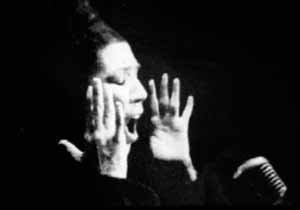
A photographic tour of the Iran you’ve never seen
Ciphers: Tension with Tradition in Contemporary Iranian Photography at SAW Gallery. The exhibition will run until June 9, 2012.

Image courtesy of SAW Gallery
by Peter Simpson, Ottawa Citizen Blogs
You can
learn about Iran on most any newscast on any day, but what, really, do you know
of Iranian people? Iranian culture? Iranian art?
We see
anti-American protests in the streets of Tehran, or we see the president of
Iran giving endless, hateful speeches that reliably ramble into incoherence.
That’s about all we see of Iran, and of Iranians.
“What we
think in North America of Iran is burdened by media images, by news stories
that are all about politics and about very difficult things,” says Andrea
Fitzpatrick, an assistant professor in the visual arts department at the
University of Ottawa, and curator of a new exhibition of contemporary Iranian
photographs and video at SAW Gallery. “In this exhibition you will not see
those issues. It’s not that the exhibition is a clouding over or white-washing,
but the art is . . . not about political issues.”
If that
seems a political opportunity lost, consider the alternative value of seeing
everyday Iranians doing the everyday things that consume most of their lives.
This is the quotidian Iran, the real Iran, an insight into the private lives of
the Iranian public.
It’s also
a bridge, in that the photographic concepts, techniques and styles on display
are universal, and therefore drive home the understanding — perhaps for some
viewers the revelation — that Iranians aren’t that much different from us
in the west. Only the motifs and themes make the photographs and videos
distinctly Iranian, and they are more easily digested by western viewers
precisely because they are wrapped in familiar aesthetics.
“It’s
basically,” Fitzpatrick says, “how artists are representing ancient Persian
history or those traditions, some of which are pre-Islamic, using contemporary
digital technology . . . in a way that is aesthetically sophisticated and could
be understood by international art audiences.”